
Playing games on your Android device doesn’t always require complex controls or high-end hardware. Sometimes, all you need is a game that fits comfortably in one hand, allowing you to relax, multitask, or just unwind. Whether you’re commuting, taking a break, or just looking for a casual distraction, these hand-friendly titles prove that gaming can be simple, engaging, and enjoyable without the need for advanced skills or equipment. Many of these options are free, offer minimal but engaging graphics, and are perfect for quick sessions. Keep reading to discover your next favorite one-handed Android game and learn how to enhance your game development journey with useful resources.
Which of these one-handed Android games have you tried?
1270 votes
- Tennis Clash
- Paper.io 2
- Whiteout Survival
- Cell to Singularity: Evolution
- Mekorama
- None of them
Tennis Clash
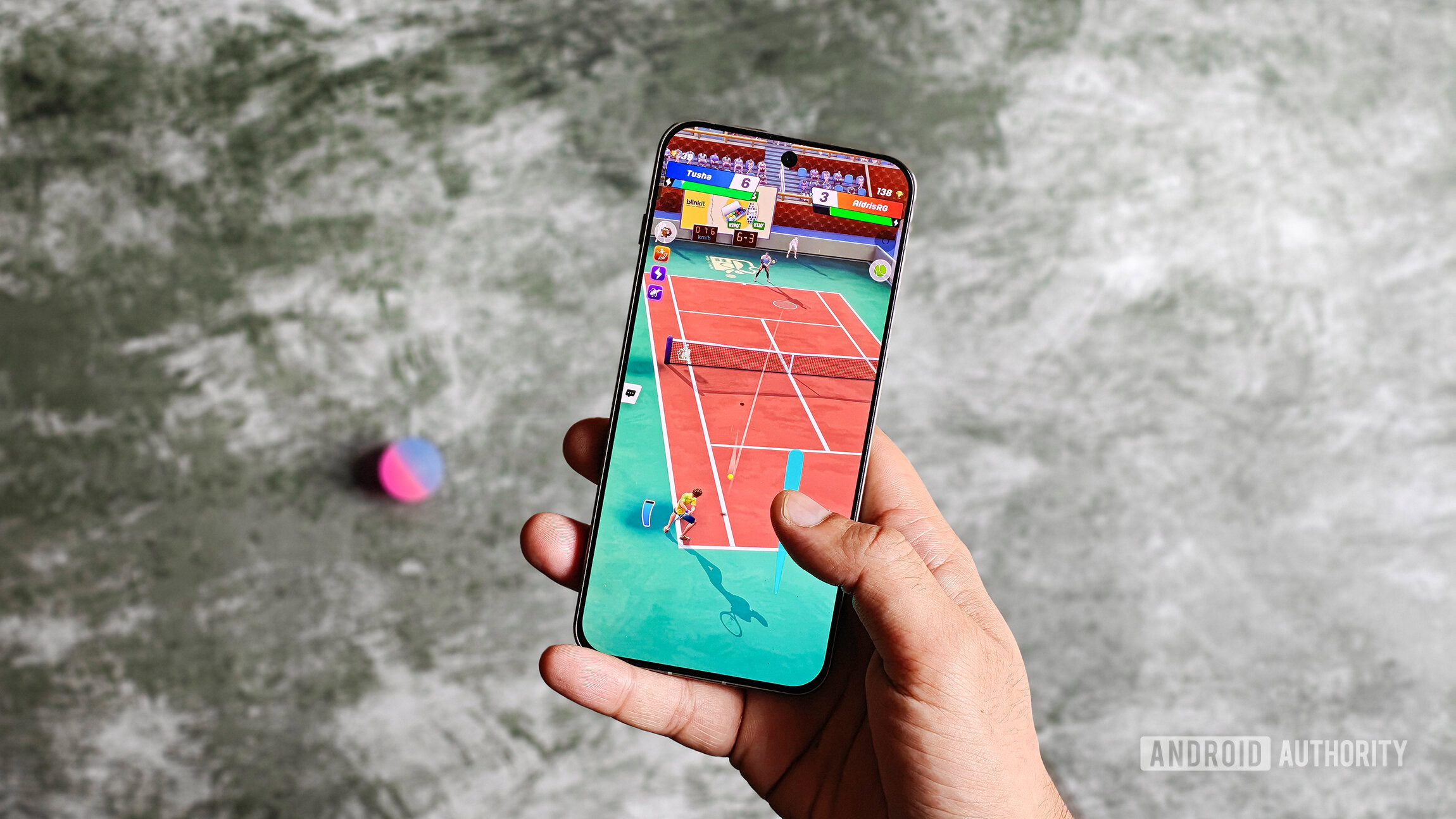
I’ve never been particularly skilled at real-world sports, but I love simulating the thrill of victory through sports video games. Tennis Clash has become my go-to for quick, one-handed gameplay. Its controls are incredibly intuitive—once a match begins, all I need to do is swipe across the screen to hit the ball or tap on the court to move my player. The simplicity of just two controls makes it easy to keep playing with one hand while I multitask—whether I’m organizing my desk, finishing chores, or petting my dog. The game requires almost no learning curve, and a simple swipe ensures my shots go in the right direction.
Matches are played against real human opponents, adding a layer of competitiveness that bots can’t provide. The game also allows players to join clubs, although it doesn’t support inviting others directly for matches, which is a minor disappointment. The stunning graphics and detailed character animations keep me immersed, even during casual play. I enjoy unlocking new characters with unique skills and outfitting them with the best gear, which makes time fly by effortlessly.
Paper.io 2
I find Paper.io 2 deceptively simple but incredibly addictive. The core mechanic involves controlling a colorful square to claim territory on a plain white 2D map. Starting from a small area, you make loops around your territory to expand your control, avoiding other players and their trails. Initially, steering the cube with just your thumb felt a bit tricky without a virtual joystick, but I quickly adapted.
The game’s minimalist graphics are charming, with each cube adorned in playful textures and colors—my favorite being a donut-inspired design that keeps me hooked. What really draws me in is the competitive element: I need to be cautious when crossing into other players’ territories because getting cut off or trapped results in elimination. This risk makes every game tense and engaging, encouraging me to immediately jump into another round. Despite the frequent 30-second ads after each match, the gameplay remains compelling enough to overlook the interruptions. Playing with a single thumb or finger is all that’s needed, making it perfect for quick sessions.
Whiteout Survival
Whiteout Survival offers a unique twist on city-building games, set in a chilly wilderness. It feels reminiscent of Clash of Clans, but with a focus on human characters battling the elements rather than mythical creatures. As the leader of your village, your primary goal is to keep your villagers warm, well-fed, and employed. You upgrade their homes, improve food supplies, and manage their tasks—all from a simple interface that supports touch controls suitable for one hand.
Your success depends on keeping your villagers happy, which adds a rewarding layer of management. While you can explore nearby areas or attempt to conquer new territories with an army, I prefer to maintain peaceful diplomatic relations with neighboring villages. Watching your tiny characters go about their routines and occasionally giving them treats adds a personal touch that makes the game more engaging. I started playing casually but soon found myself taking active steps to ensure the prosperity and happiness of my virtual community.
Cell to Singularity: Evolution
Many years ago, I stumbled upon Cell to Singularity, and it quickly became my obsession. It’s less a traditional game and more a fascinating simulation of the universe’s evolution, from a single-celled organism to complex life forms. The gameplay is largely automated—most of the growth occurs without direct input—but tapping the screen accelerates the process and unlocks new milestones.
This game features stunning cinematic scenes at each evolutionary breakthrough—like the first land-dwelling creatures or the emergence of humans—that I find especially gratifying. I enjoy manipulating the inorganic elements and observing how they combine to form increasingly complex structures, all while checking the progress on my virtual supercomputer. The game’s layered realms and scientific themes make it feel more like an interactive experiment than a typical game. Despite its addictive nature, I often find myself quitting without feeling overwhelmed, appreciating its unique approach to entertainment and education.
Mekorama
Mekorama stands out as one of the most meditative games I’ve ever played. It’s an isometric puzzle game where you guide a small robot through intricate, three-dimensional structures. The robot’s jiggly movements and physics add a playful charm that sets it apart from similar titles like Monument Valley or Lara Croft GO, which often have more melancholic atmospheres.
Each level presents a fresh challenge—some simple, others requiring hours of thinking to solve. The graphics are excellent, supporting a port to major consoles, and there’s even a creative mode where you can design your own puzzles. One of the best features is that Mekorama doesn’t require an internet connection, making it perfect for playing offline during flights or in areas with limited connectivity. Its calming gameplay and beautiful visuals make it a perfect choice for moments of relaxation and mindfulness.
—
Whether you’re a casual gamer or someone looking for simple yet captivating experiences, these titles demonstrate that gaming on a single hand can be both fun and fulfilling. For aspiring developers, exploring how to create such engaging small-screen experiences can be simplified with resources like finding free assets to jumpstart your projects. Plus, understanding how to spot potential issues like malicious modifications in game files is crucial, which you can learn about through recognizing suspicious game modifications.
If you’re interested in turning your ideas into successful mobile hits, consider strategies outlined in tutorials on bringing engaging concepts to the mobile market. And when designing your game, don’t forget the importance of creating immersive experiences tailored for small screens. Share your favorite one-handed games or your own creations in the comments—your insights could inspire others to discover their next great mobile adventure!