


Video game creation is a fascinating and complex process that differs significantly from traditional software engineering. While it shares some foundational principles, the unique demands, multidisciplinary collaboration, and iterative nature of game development make it a distinct field. Understanding how games are typically built provides insights into this vibrant industry, which continues to grow as both a form of entertainment and a technological achievement. This article explores the stages, roles, and challenges involved in bringing a game from concept to release, offering a comprehensive look at the development journey.
—
Getting Started in Games Development
The gaming industry is one of the largest entertainment sectors globally, exceeding $200 billion in revenue. It experienced remarkable resilience during the COVID-19 pandemic, with players engaging in everything from fast-paced action titles like DOOM and The Last of Us to more laid-back experiences such as Animal Crossing and Bugsnax. Many also participated in live-service games like Fortnite and Dota 2, emphasizing social interaction during times of social distancing.
Embarking on a career in game development can be daunting due to the industry’s secretive nature. Unlike conventional software projects, the tools, techniques, and pipelines used in game creation are often not widely documented or publicly shared, leading to misconceptions or incomplete understanding among newcomers. This lack of transparency creates a gap between creators and consumers, exemplified by social media leaks and rumors. For software engineers interested in breaking into this field, understanding how their skills translate to game development can be challenging.
My own transition from banking software engineering to game development exemplifies this journey. In 2010, I was working in finance, but I eventually moved into academia, teaching computer science and game development. Despite my enthusiasm and early experience creating rudimentary games during my PhD, I quickly realized how little I knew about the actual process of making games. Over the past decade, I’ve dedicated myself to learning more—becoming a course director for university programs, launching a YouTube channel focused on AI in games, and consulting for major companies like Ubisoft and Intel. This ongoing journey highlights the importance of continuous learning and adaptation in the industry.
If you’re curious about how game development works, I recommend exploring resources like the platforms that support cross-platform development, which can significantly broaden your opportunities and understanding.
—
Games Are Software, But in a Non-Standard Way
At their core, video games are complex software systems. As a developer, your primary responsibilities include implementing new features, maintaining a large and evolving codebase, fixing bugs, and ensuring smooth performance across various platforms with differing hardware capabilities. My background in mobile app development prepared me well for many of these technical challenges.
However, what sets game programming apart is the highly multidisciplinary environment in which it takes place. Unlike typical software projects, game development involves collaboration among programmers, artists, designers, writers, sound engineers, and many other specialists. Each discipline contributes a vital piece to the final product, requiring seamless integration and communication.
This diversity necessitates a flexible approach to software engineering, where understanding visual aesthetics, gameplay mechanics, storytelling, and user experience is as crucial as mastering coding skills. The challenge lies in balancing technical feasibility with creative vision, often under tight deadlines and evolving requirements.
—
Typical Roles Within Games Development
A successful game project depends on a variety of roles working together harmoniously. Programmers collaborate closely with designers, artists, animators, and writers to turn ideas into playable experiences. This team-based approach is one of the industry’s most energizing yet challenging aspects, as it fosters creativity and innovation through collaboration.
The game director plays a pivotal role, guiding the overall creative vision and making high-level decisions. They work with various teams to ensure the project stays aligned with its artistic and gameplay goals. Meanwhile, producers focus on project management, overseeing schedules, budgets, and resource allocation to ensure the game is finished on time and within scope.
In many studios, the director acts similarly to a product manager, focusing on the creative and strategic aspects, while the producer handles logistical and operational tasks. This division of responsibilities helps maintain clarity and focus throughout development. Larger teams may also have specialized roles such as technical directors, UI/UX designers, and quality assurance managers, all working together to bring the game to life.
The global health crisis underscored the importance of effective remote collaboration, prompting studios to adopt new workflows and communication strategies to keep projects on track despite physical separation.
—
How Games Typically Get Built
The process of constructing a game is often more art than science, with many projects emerging from iterative experimentation rather than a strict, linear plan. Starting with a prototype, developers create basic versions of gameplay mechanics using placeholder assets. This early version aims to demonstrate core functionality and fun, serving as a proof of concept to secure funding or greenlighting for full production.
Once the prototype is approved, the project enters full development, which involves simultaneous efforts across multiple disciplines. Programmers develop core systems, artists craft visual assets, and designers refine gameplay and progression features. This phase is highly dynamic, with assets and features continuously integrated into the evolving build.
Integration testing becomes a significant challenge in this phase, as assets from different teams often clash or cause instability. Dedicated quality assurance (QA) teams help identify and resolve these issues, although resource constraints may delay thorough testing until later stages.
Managing feature creep—the tendency for scope to expand beyond original plans—is a constant concern. As games become more ambitious, developers often face pressure to incorporate new trends or ideas, sometimes leading to significant redesigns. The success story of Fortnite illustrates how a game can pivot and evolve dramatically during development, transitioning from a wave-defense shooter to a global battle royale phenomenon.
However, many projects struggle with indefinite development cycles, where core gameplay elements remain unclear until late in production. This “fugue state” prolongs timelines and increases technical debt—systems built for one purpose but repurposed later—adding stress and complexity. To mitigate these issues, studios increasingly adopt practices like test-driven development, automated builds, and agile methodologies, adapting traditional software practices to the unique environment of game creation.
—
The Game Development Cycle
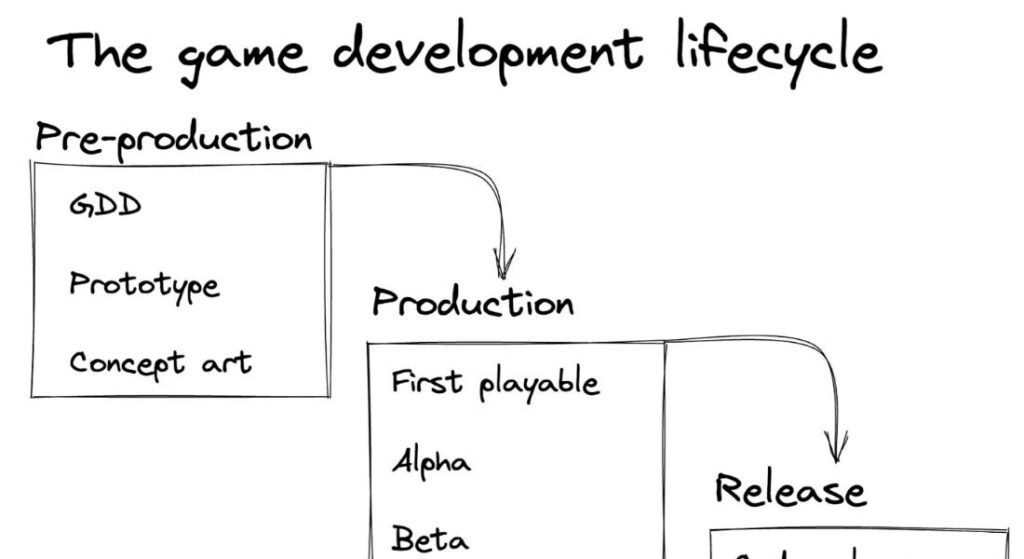
Unlike conventional software projects, game development often involves multiple iterations and continuous refinement, even after the initial launch. Typically, the process can be broken down into three main phases:
- Pre-production: Conceptualization, storyboarding, and prototyping. During this stage, core ideas and mechanics are explored, and initial art and design concepts are developed.
- Production: Full-scale development, including coding, art creation, level design, and testing. This phase can last several years, depending on the scope.
- Post-release: Ongoing support, updates, and expansions. Many games continue to evolve long after their initial launch through patches and downloadable content.
Though these phases are common, actual workflows vary based on project size and studio structure. Indie developers, for example, may cycle rapidly through these stages with fewer resources, while AAA studios follow more extensive, formalized processes. The average game takes roughly two to five years to develop, involving a complex interplay of creativity, technology, and project management.
Additional resources on game development tools and services can provide deeper insights into the specialized software and middleware used throughout this lifecycle.
—
Final Thoughts
Building a video game is a uniquely intricate endeavor that blends artistry, engineering, and storytelling. While rooted in traditional software development principles, the multidisciplinary, iterative, and often unpredictable nature of game creation sets it apart. For those interested in entering this dynamic industry, understanding its workflows, roles, and challenges is essential. Embracing innovative practices and continually learning new skills are key to navigating the complexities of game development successfully.
For a deeper dive into how different types of games are unlocked and developed, explore variety of game types and their development techniques. Whether you’re an aspiring developer or just curious about the process, the journey from concept to console is as rewarding as it is demanding.