


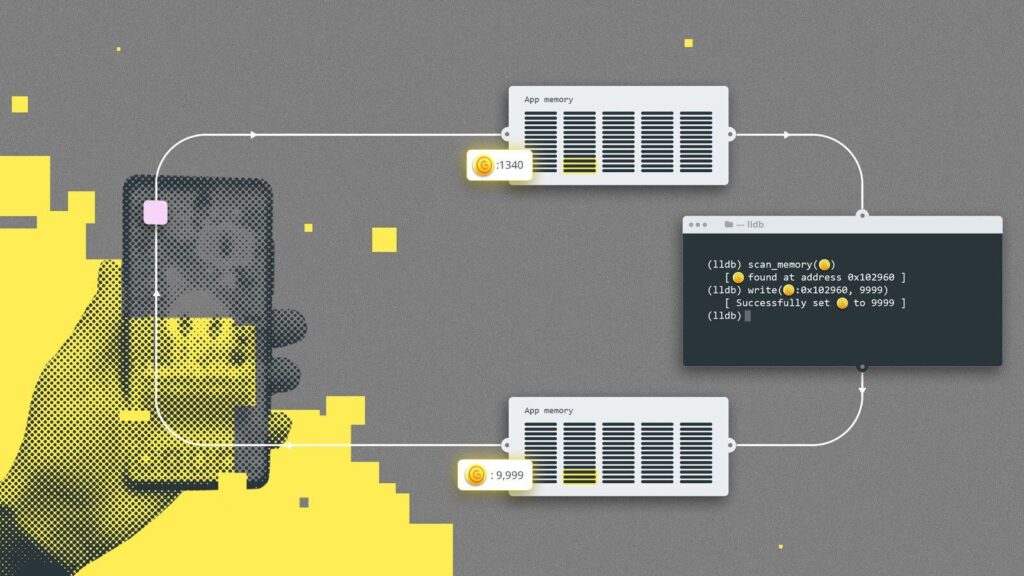
Mobile game security is an ongoing challenge, especially as hackers develop sophisticated techniques to manipulate game behavior without jailbreaking devices. Recent discussions have shed light on how tools like LLDB, combined with Xcode, can be used by attackers to tamper with apps directly on unmodified iOS devices. Understanding these methods is crucial for developers aiming to bolster their security measures and prevent cheating or tampering in their applications.
While much attention has been given to jailbroken devices, where tools like iGameGod operate with elevated privileges to access and modify memory, it’s important to recognize that similar techniques can be employed on non-jailbroken devices through more subtle means. This article explores how attackers can leverage LLDB, a debugger integrated with Xcode, to scan and alter application memory in real-time, potentially compromising app integrity and fairness.
Differences Between Hacking Jailbroken and Non-Jailbroken Devices
Tools such as iGameGod function with root-level access on jailbroken systems, allowing them to inject code and manipulate memory at will. These tools can scan the application’s memory, modify variables, and cheat in real-time due to elevated permissions. However, even on devices that haven’t been jailbroken, attackers can use LLDB to perform similar actions by attaching to a running process. This method involves less obvious steps but can still be effective if proper protections are not in place.
In this context, attackers can:
- Scan device memory for specific values, such as scores or in-game currency.
- Use LLDB commands to execute custom code within the app’s process and modify data dynamically.
The iOS platform provides functions like `mach_vm_region` to query memory regions within a process. This API allows an attacker to enumerate memory segments, identify writable regions, and search for particular data patterns. For example, by iterating through memory regions, an attacker can locate the area where game scores are stored and overwrite them with manipulated values.
Memory Scanning and Manipulation with LLDB
To perform memory scans, an attacker would typically:
- Use `mach_vm_region` to list memory regions of the target app.
- Filter regions based on protection attributes, such as read/write permissions.
- Search through these regions for specific values, like a score or health indicator.
- Overwrite the identified values with malicious or advantageous data.
Here’s a simplified illustration of how an attacker might write code to scan memory:
“`c
uint64_t size, addr = 0;
vm_region_basic_info_data_64_t info;
while (mach_vm_region(task, &addr, &size, VM_REGION_BASIC_INFO, (vm_region_info_t)&info, &count, &object_name) == KERN_SUCCESS) {
if (info.protection & VM_PROT_WRITE) {
for (uint64_t ptr = (uint64_t )addr; (uint8_t)ptr < (uint8_t)addr + size; ++ptr) {
if (*ptr == target_value) {
*ptr = new_value;
}
}
}
addr += size;
}
“`
Using LLDB, an attacker can compile and inject such code snippets directly into the app process. By pausing execution and inserting commands with `expression -l c –`, they can run custom C code to perform memory searches or modifications. After completing the tampering, resuming the process allows the attacker to see immediate effects, such as increased scores or unlocked items.
Furthermore, because app memory is constantly changing—variables are allocated and freed dynamically—direct memory access can sometimes cause segmentation faults. To prevent crashes or corruption, safer methods like `mach_vm_read_overwrite` are recommended for reading memory without risking instability.
Protecting Your App Against Memory Tampering
Developers should implement multiple layers of security to defend against such attacks. Techniques include:
- Obfuscating critical variables and code paths to make memory scanning more difficult.
- Using runtime checks and integrity verification to detect unauthorized modifications.
- Employing security tools like ProGuard for code shrinking and obfuscation.
- Leveraging runtime application self-protection (RASP) solutions to monitor app behavior and detect debugging or tampering attempts.
For more detailed insights into securing mobile applications against memory tampering, consult resources like this resource guide, which offers strategies to protect your assets and code.
Conclusion
While tools like LLDB provide powerful debugging capabilities for developers, they can also be exploited maliciously to manipulate app behavior on non-jailbroken devices. Recognizing the methods hackers use to scan and modify memory in real-time is essential for building robust defenses. Implementing comprehensive security measures, including code obfuscation, runtime checks, and tamper detection, can significantly reduce the risk of cheating and ensure fair gameplay.
For more information on how to identify if a cheat developer is targeting your game, explore this identification guide.
Understanding these attack vectors allows developers to stay one step ahead and create more secure, trustworthy applications that protect both their revenue streams and user experience.